by Robert Braun | Jul 25, 2025 | Resources
Diesel fuel is a widely used energy source for powering vehicles, machinery, and backup generators. However, over time, diesel fuel can degrade or contamination from external sources can occur, leading to numerous issues such as clogged filters, engine inefficiency, and even serious damage.
To combat these problems, diesel fuel polishing has become an essential maintenance practice. This article delves into what diesel fuel polishing is, why it’s necessary, and how it is performed.
Diesel fuel polishing can be either a fixed permanent system on the equipment or a mobile system that can service multiple purposes.
Understanding Diesel Fuel Degradation
Diesel fuel is not immune to the ravages of time, and several factors contribute to its degradation:
Water Contamination: Diesel fuel often contains water due to condensation in storage tanks. Water in fuel can lead to microbial growth and corrosion.
Microbial Growth: Bacteria and fungi can thrive in the water found in diesel fuel, forming sludge and acid that can corrode fuel systems.
Oxidation: Exposure to air can cause the fuel to oxidize, forming gums and varnishes that can clog filters and fuel injectors.
Sedimentation: Over time, particles and debris can settle in the diesel fuel, leading to blockages and inefficiencies.
What is Diesel Fuel Polishing?
Diesel fuel polishing is a process designed to clean and restore the quality of diesel fuel. It involves removing water, debris, microbes, and other contaminants from the fuel to ensure it remains efficient and safe for use. The process is essential for maintaining the performance and longevity of diesel engines, particularly in scenarios where fuel is stored for extended periods.
Why is Diesel Fuel Polishing Necessary?
There are several reasons why diesel fuel polishing is a critical maintenance task:
Engine Efficiency: Clean fuel ensures the engine operates efficiently, providing better fuel economy and performance.
Preventative Maintenance: Regular polishing prevents the build-up of contaminants that could lead to costly repairs or engine failure.
Environmental Considerations: Reducing contaminants in diesel fuel can lead to lower emissions, making it a more environmentally friendly option.
Protection of Investments: Backup generators and other critical machinery rely on high-quality diesel fuel to operate during emergencies. Polishing ensures that these systems are ready when needed.
The Diesel Fuel Polishing Process
The diesel fuel polishing process involves these key steps below.
1. Initial Assessment: The process begins with an assessment of the fuel’s condition, including testing for water content, microbial presence, and sediment levels.
2. Water Removal: Using specialized equipment, water is extracted from the fuel. This step is crucial as water is a primary contributor to microbial growth and corrosion.
3. Filtration: The fuel is passed through a series of filters that remove particulates, sludge, and other solid contaminants. These filters can range from coarse to fine, depending on the level of contamination.
4. Microbial Treatment: If microbial contamination is present, biocides are added to the fuel to eliminate bacteria and fungi. This step prevents further microbial growth and protects the fuel system.
5. Recirculation and Polishing: The fuel is recirculated through the polishing system multiple times to ensure maximum removal of contaminants. This process may involve the use of centrifugal separators or additional filtration systems like regular fuel filters.
6. Quality Testing: After polishing, the fuel is tested again to ensure it meets quality standards and is free from harmful contaminants.
Advanced Technologies in Fuel Polishing – Integration into Equipment
Modern fuel polishing systems have integrated advanced technologies to enhance the efficiency and effectiveness of the process:
Automated Systems: Many fuel polishing systems are fully automated, requiring minimal human intervention. These systems can continuously monitor fuel quality and make real-time adjustments.
Remote Monitoring: Advanced systems can be monitored remotely, allowing operators to track fuel quality and system performance from anywhere.
Real-time Data Analysis: With the integration of sensors and digital technology, real-time data analysis is possible, providing instant feedback on fuel conditions.
Choosing the Right Fuel Polishing System
Selecting the appropriate fuel polishing system depends on several factors, including the size of the fuel storage, the level of contamination, and the specific requirements of the application. Here are some considerations:
Capacity: Ensure the system can handle the volume of fuel in storage.
Contaminant Level: Consider the types of contaminants present and choose a system with the appropriate filtration and treatment capabilities.
Mobility: For facilities with multiple storage tanks, a portable system may be beneficial instead of a fixed permanent system.
Cost: Balance the upfront cost with long-term savings from improved fuel efficiency and reduced maintenance.
Conclusion
Diesel fuel polishing is an indispensable process for maintaining the quality and performance of diesel fuel. By removing water, particulates, and microbes, fuel polishing ensures that diesel engines run efficiently and reliably.
Investing in regular fuel polishing can prevent costly repairs, protect critical systems, and contribute to a cleaner environment.
Whether for commercial fleets, industrial machinery, or backup generators, diesel fuel polishing is a smart maintenance strategy that safeguards your investment and ensures operational readiness.
by Robert Braun | Jul 20, 2025 | Resources
Diesel engines are renowned for their power, durability, and fuel efficiency. However, maintaining optimal performance requires regular care and the right additives.
Liqui Moly Super Fuel Additive Part 5120 is a popular choice among diesel engine enthusiasts, designed to enhance engine performance, reduce emissions, and improve fuel efficiency.
This review will explore its features, benefits, and real-world performance to determine if it lives up to its reputation.
Overview of Liqui Moly Super Fuel Additive Part 5120
Liqui Moly, a German company with a longstanding reputation for high-quality automotive products, offers a range of additives designed to optimize engine performance.
Part 5120 is specifically formulated for diesel engines, aiming to provide comprehensive benefits that cater to both the engine and the environment.
Key Features
1. Injector Cleaner: The additive efficiently cleans fuel injectors, removing deposits that may have accumulated over time. This is a fuel atomization and combustion efficiency improver.
2. Corrosion Protection: It provides a protective layer on metal surfaces within the fuel system, preventing rust and corrosion, which can lead to costly repairs and reduced engine lifespan.
3. Cetane Booster: By increasing the cetane number of diesel fuel the additive enhances ignition performance, this resulting in smoother engine operation and reduced engine rattle.
4. Emission Reduction: By promoting more complete combustion, it helps reduce the emission of harmful pollutants, contributing to a cleaner environment.
5. Fuel Economy: Improved combustion efficiency can lead to better fuel economy, offering potential savings for vehicle owners over time.
Benefits of Using Liqui Moly Super Fuel Additive Part 5120
Enhanced Engine Performance
One of the primary claims of Liqui Moly Super Fuel Additive is its ability to enhance engine performance. By cleaning the fuel injectors and improving combustion, the additive allows the engine to deliver power more effectively.
Users have reported noticeable improvements in throttle response and overall engine smoothness after using the product.
Longevity and Maintenance
Regular use of Liqui Moly Super Fuel Additive can contribute to the longevity of a diesel engine. By preventing corrosion and removing deposits, the additive reduces the likelihood of engine wear and tear.
This translates into fewer maintenance issues and potentially extends the lifespan of the engine.
Environmental Impact
With growing concerns about vehicle emissions and their impact on the environment, products that can reduce emissions are highly valuable.
Liqui Moly Super Fuel Additive supports lower emissions by promoting more efficient fuel combustion. This can be beneficial in areas with strict emission regulation laws.
Cost-Effectiveness
While the initial cost of the additive may seem like an additional expense, the potential savings in fuel consumption and reduced maintenance costs can make it a worthwhile investment. Improved fuel economy can offset the cost of the additive over time, making it an economically sensible choice for diesel vehicle owners.
Real-World Performance
User Experiences
Feedback from users of Liqui Moly Super Fuel Additive Part 5120 has been overwhelmingly positive. Many users have noted a significant improvement in engine performance, particularly in vehicles with high mileage.
In terms of fuel economy, users have reported varying degrees of improvement. Some have experienced noticeable gains, while others found the differences to be more subtle. However, the general consensus is that the additive contributes to more efficient fuel use.
Comparative Analysis
When compared to other diesel fuel additives on the market, Liqui Moly stands out for its comprehensive approach. While many additives focus solely on cleaning or performance enhancement.
Liqui Moly Part 5120 offers a balanced blend of cleaning, protection, and enhancement. This makes it a versatile option suitable for a wide range of diesel engines.
Conclusion
Liqui Moly Super Fuel Additive Part 5120 is a powerful tool for diesel engine maintenance and performance enhancement.
Its ability to clean injectors, protect against corrosion, boost cetane levels, and reduce emissions makes it a valuable addition to any diesel vehicle’s maintenance regimen.
While individual results may vary, the potential benefits in terms of improved engine performance, longevity, and fuel economy are compelling reasons to consider incorporating this additive into regular vehicle care practices.
For those seeking a reliable and effective solution to optimize their diesel engine’s performance and environmental impact,
Liqui Moly Super Fuel Additive Part 5120 is a commendable choice IMHO and we give it the tick of approval.
by Robert Braun | Jul 16, 2025 | Resources
From filter plugging, to microbial contamination on boats, to long term fuel storage, to troubleshooting of diesel fuel problems, FAQ’s + more info in these printable PDF resources courtesy of BP.


by Robert Braun | Jul 14, 2025 | Resources
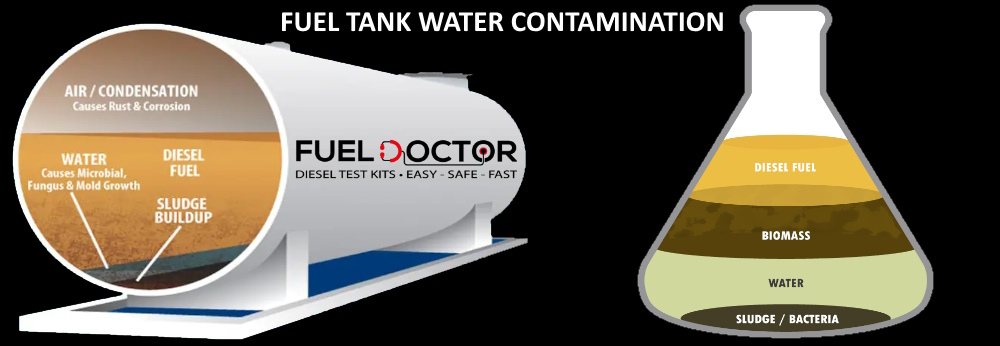
Water and diesel fuel do not make great friends in life if they manage to get together. Water in your fuel will foster the growth of microbial bacteria and these types of bugs can even damage the walls of steel tanks if left unchecked.
This growth has can cause defects to engine and fuel system components, resulting in repairs that will burn your bank balance and also result in your equipment being out of service. Yes, it’s quite normal to find water in your diesel fuel tanks, but there is a fine line when small amounts can turn into a large problem for your engine and it’s reliability.
Acceptable Levels of Water in Diesel Fuel
The acceptable level of water in diesel fuel is no more than 200 mg/L / parts per million as per EN 590 standards. This is the most accurate specification to use for testing methods of your diesel fuel.
Why Water is in Your Diesel Fuel Tank

There are several reasons why water is inside your fuel tank:
Condensation.
Diesel is a stable fuel that produces no fumes unlike gasoline. The lack of vapour in diesel tanks means there is the possibility for air to enter your tank unopposed from any positive pressures. As the daily temperature changes from hot to cold the fuel tank draws in humid air that collects as water condensation on the inside walls of the tank which drops into your fuel. Over time this water condensation can cause large amounts of water in your diesel tanks to accumulate.
Poor Fuel Handling.
Water is often placed into diesel tanks while filling up and when poor handling of the fuel happens due to errors that you have no control of. Fuel stations are usually careful to separate water from their diesel while in storage tanks and when you pump from them, but it’s still possible to transfer water into your rank when refilling from a contaminated tank at a fuel station. You just never know what your getting sometimes from fuel stations.
Tank Caps and Filler System Leaks.
Leaks in filler caps or fuel filler systems can allow water and other contaminants to enter your tank.
Signals Water is in Your Diesel
As mentioned, it’s normal to find small amounts of water in your diesel fuel – you really cannot have zero PPM parts per million of water levels in diesel. If the water level is low then it won’t create issues that you should worry about as your water separator like a Racor filter water separator will take care of this. But be warned that excessive amounts of water in your diesel will allow the growth of microbes to grow. Eventually, this will damage your injectors, your fuel lines, damage your fuel pumps, diesel tanks and key components in your engine.
Key symptoms of water in your diesel tanks to look out for
Engine lacks power
Difficulty in engine starting
Surging up/down idle speeds
White smoke from exhaust system
Damaged fuel injectors and pumps
Testing for Water in Your Diesel Fuel and Tank
Expensive diesel repairs due to water in the system is a common problem, it’s a requirement to keep an eye on the quality of fuel in your tank.
Most diesel-powered vehicles and equipment have a water separator in the fuel system. You can check it yourself to make sure it’s not gathering large amounts of water, a simple drain of the water from the filter like in the images below is usually all you need to do to remove the contamination.

Check the diesel tanks. One of the best ways to test for water is to look into your tanks with a flashlight, visually the fuel should be clear and bright.
Diesel that has become contaminated with water is darker than usual. Clean diesel is clear and light coloured in appearance. Dark or cloudy fuel can tip you off that there is water in the fuel system already.
NB – for tax evasion purposes some fuel makers add coloured dyes to their fuel for identification and law enforcement.
Water in diesel testing kits. You can use water in diesel fuel testing kits that quickly and safely indicates water in your fuel. Our kits can perform tests in just minutes and they can be used in the field or in the workshop without the need for an expensive laboratory analysis.

Summing Up
Water in your diesel tanks can become a problem which result in major repairs if you don’t test on a regular basis. Testing should be a part of your regular engine maintenance program.
by Robert Braun | Jul 12, 2025 | Resources
In the realm of automotive care, fuel additives are often touted as the unsung heroes that help enhance engine performance and efficiency. One such product that has garnered attention is the Liqui Moly Speed Tec Fuel Additive Part 3722.
In this review, we will delve into the specifics of this additive, examining its composition, benefits, and effectiveness in real-world applications.
Introduction to Liqui Moly
Liqui Moly is a German company renowned for its high-quality automotive lubricants, additives, and car care products. With a strong reputation built over decades, Liqui Moly products are trusted by both professionals and enthusiasts globally.
The Speed Tec Fuel Additive Part 3722 is part of their extensive line-up, designed to optimize vehicle performance.
Composition and Purpose
The Liqui Moly Speed Tec Fuel Additive is formulated to enhance the driving experience, particularly focusing on improving the acceleration and responsiveness of the engine. It is designed for use in all two-stroke and four-stroke gasoline engines, making it versatile across a range of vehicles, including cars, motorcycles, and even boats.
Key Ingredients
1. Petroleum Distillates: This component helps in cleaning the fuel system by dissolving deposits and impurities.
2. Synthetic Detergents: These agents work to prevent the build-up of new deposits, ensuring that the fuel system remains clean over time.
3. Combustion Improvers: These additives enhance the combustion process, leading to better fuel efficiency and power output.
Benefits of Speed Tec Fuel Additive
The primary goal of the Speed Tec Fuel Additive is to improve engine performance, and it achieves this in several ways:
1. Enhanced Acceleration: Users have reported noticeable improvements in throttle response, allowing for smoother and more immediate acceleration.
2. Fuel Efficiency: By improving the combustion process, the additive can increase fuel economy. This is particularly beneficial for drivers looking to extend their mileage without compromising on engine performance.
3. Engine Protection: The cleaning agents in the formula help remove existing deposits while preventing new ones from forming, thereby reducing engine wear and extending the life of the vehicle.
4. Versatility: Suitable for various types of gasoline engines, this additive provides flexibility for those with multiple vehicles.
User Experience and Effectiveness
Positive Feedback
Many users have praised Liqui Moly Speed Tec for its immediate impact on engine performance. Reports of smoother idling and quicker acceleration are common, and some users have also noted improvements in fuel economy after consistent use.
The product’s ease of use—simply added to the fuel tank—is another point of appreciation.
Considerations
While the product is generally well-received, some users have expressed skepticism regarding the long-term benefits of fuel additives in general. It’s important to note that while additives can improve performance, they are not a substitute for regular maintenance and using quality fuel.
Application and Usage
Using the Liqui Moly Speed Tec Fuel Additive is straightforward. The manufacturer recommends adding the product to the fuel tank before filling it with gasoline. This ensures optimal mixing and effectiveness. It is suitable for use at regular intervals, particularly when a boost in performance is desired.
Cost and Availability
Liqui Moly products, including the Speed Tec Fuel Additive, are widely available online and in automotive stores. Priced competitively within the market, it offers good value considering its benefits.
While some may view it as an additional expense, the potential savings in fuel costs and engine repairs can offset the initial investment.
Environmental Impact
As with any chemical product, considering environmental impact is essential. Liqui Moly Speed Tec is designed to be as environmentally friendly as possible, minimizing harmful emissions by promoting more complete combustion. Nevertheless, responsible usage and disposal are crucial to reducing environmental harm.
Conclusion
The Liqui Moly Speed Tec Fuel Additive Part 3722 stands out as a reliable choice for drivers looking to enhance their vehicle’s performance.
With its ability to improve acceleration, fuel efficiency, and engine cleanliness, it offers tangible benefits for a wide range of gasoline engines.
While it is not a replacement for regular maintenance, it can be a valuable addition to a comprehensive vehicle care regimen.
For those seeking a noticeable boost in their driving experience, Liqui Moly Speed Tec Fuel Additive is worth considering.
As with any product, results may vary based on individual vehicle conditions and usage patterns, but the overall feedback suggests that this additive delivers on its promises so we give it the big thumbs up.